Professional Narrative – Reflection
Foundation — Month 3
Career Positioning • Professional Narrative — Reflection
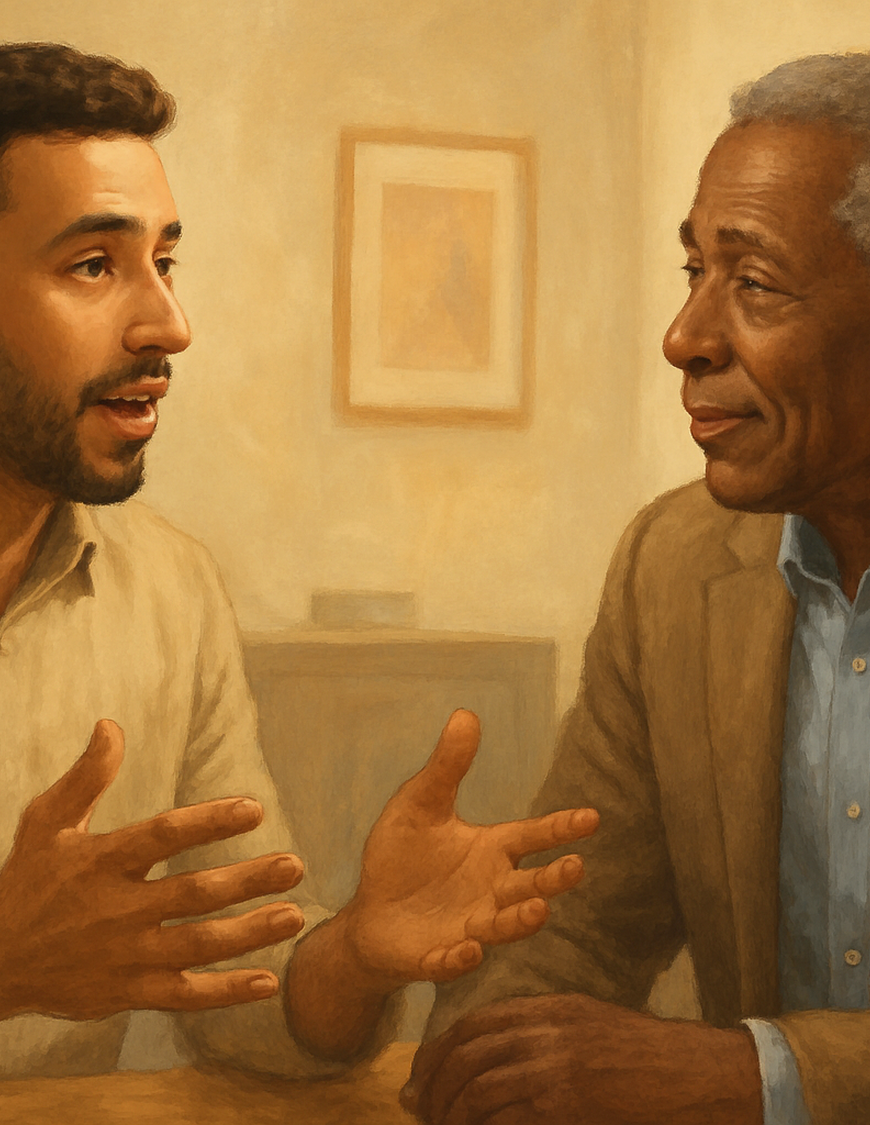
Why Telling Your Own Story Feels So Uncomfortable — And Why You Should Do It Anyway
Career Positioning — Reflection
There’s a specific discomfort that comes up when someone asks you to talk about yourself professionally. It’s not quite embarrassment. It’s not quite fear. It’s something closer to the feeling of trying to describe a piece of music you know by heart — it’s all right there, but the moment you try to put it into words, it slips a little. For a lot of people, their own career story lives in that gap: clearly felt, hard to articulate, even harder to say out loud without feeling like you’re either selling yourself or underselling yourself.
Part of what makes this hard is a story we tell about what it means to talk about yourself well. Many of us were taught, in various ways, that self-promotion is unseemly — that the work should speak for itself, that good people don’t need to advertise. That belief is understandable, but it creates a real problem: the world doesn’t reward silence. The people who get recommended, who get called, who get opportunities they didn’t even apply for, are not always the most qualified. They’re the ones whose story is clearest in someone else’s mind when an opportunity arises. Telling your story isn’t about ego. It’s about making sure the right people can see what you’re capable of.
There’s also something worth naming about what happens when you try to see your career from the outside. Most of us move through our work lives from the inside — focused on the day-to-day, the next project, the current challenge. We rarely step back far enough to notice the thread that runs through all of it. And when we do try to step back, it can feel uncomfortable — because sometimes what we see doesn’t look as coherent as we’d like. There are detours. There are roles that don’t quite fit the story we want to tell. There are choices that made sense at the time but look strange in hindsight. Here’s what’s true: that’s all of us. No career looks perfectly linear from the outside either — we just rarely see other people’s detours as clearly as we see our own.
The reframe that tends to help most is this: your professional narrative doesn’t need to make every decision look brilliant. It needs to make them look human and purposeful. The transitions that embarrass you most are often the ones that reveal the most about who you actually are and what you genuinely care about. Owning those transitions — saying clearly “I made that move because…” — is not weakness. It’s the kind of self-knowledge that makes people trust you. What question about your career story have you been avoiding telling honestly — and what would change if you told it anyway?
Reflect With AI
Career Story Reflection Guide
Explore what’s holding you back from telling your professional story with confidence — and uncover the honest, human version of your narrative that resonates most.
I want to reflect on my professional narrative — the story I tell about my career — and explore what’s making it hard to tell clearly or confidently.
Ask me these questions one at a time, waiting for my answer before moving on:
1. When someone asks you to talk about yourself professionally, what’s the first feeling that comes up — and what do you think it’s connected to?
2. Is there a part of your career story you tend to skip over or explain away? What is it, and why do you think you do that?
3. If someone who knew your work really well were telling your story on your behalf, what do you think they’d say that you’d leave out yourself?
4. What would it feel like to tell your career story as a series of intentional choices — even the ones that didn’t go to plan?
After each answer, reflect back what you’re hearing and help me see it from a new angle. When we’ve finished, offer me a one-paragraph version of my story that’s honest, human, and forward-looking — something I could actually say out loud.
About Pathfinder Campus
Pathfinder Campus is a career development community for adults navigating transitions. We combine one-on-one coaching, AI-powered practice tools, and a community of people who understand what it feels like to be in the middle of something uncertain — and who are determined to move through it with clarity and confidence.
📅 Join us Wednesday at 7:00 PM (PT)
Career Compass Community Meeting — live discussion of this week’s topic. Free for members.






My path hasn’t been a straight line, but it’s taught me how to stay steady under pressure and support a team even on tough days. I have worked in roles that demanded patience, adaptability, and strong people skills, and those experiences helped me grow a lot , even when the work didn’t always feel like the right fit. What I have learned about myself is that I’m reliable, calm, and committed to doing things well. Now I’m looking for opportunities where I can bring that same resilience and teamwork, but in an environment that aligns more with who I’m becoming and where I can continue to grow. Using this prompt has really made me to learned i am resilient, steady under pressure, and ready to share my story honestly so i can finally move forward.